

English

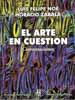
Two great Argentinean artists from different generations and aesthetic viewpoints reflect in-depth on modern and contemporary art without concealing their differences. It is often believed that artists are incapable of formulating theories. Rilke criticized painters’ right to elaborate theories on their works. Nevertheless, he did not deny himself the right to theorize on poetry. Today, in contrast, there is an excessive proclivity toward theory, fundamentally because the crisis in art today is, above all, a crisis of conscience. It is only artistic production with its implicit theory, however, that will be able to achieve an answer. Theory divorced from art making is that alone: only theory.
Luis Felipe Noé: “In our civilization of the image, everything is in crisis except the image. Since the age of mechanical reproduction, its production, circulation, velocity and consumption (both real and symbolic) have been incremented to the zillionth degree. In our societies of integrated spectacle, the image’s privilege is also a consequence of our distracted perception of the world. However, it is obvious that seeing does not suffice in order to feel and to comprehend; on the contrary, we see little and nothing because we look too quickly. I believe that the more subtle and problematic challenge comes from those who explore and investigate the image itself: contemporary artists.”
Noé and Zabala’s desire to capture the nature of contemporary art practice puts them in a situation of aesthetic reflection, revising their postulates and rereading the classics. Their conversations flow naturally, and at the same time are rigorous; they move through creation and reception, the present and its preceding history, philosophy and history. At no time do they shy away from disagreement, nor do they dissimulate contradictions, perhaps due to the need, as they say, to “confront different perspectives in order to understand something that exceeds us”.
Edited by Rodrigo Alonso.